
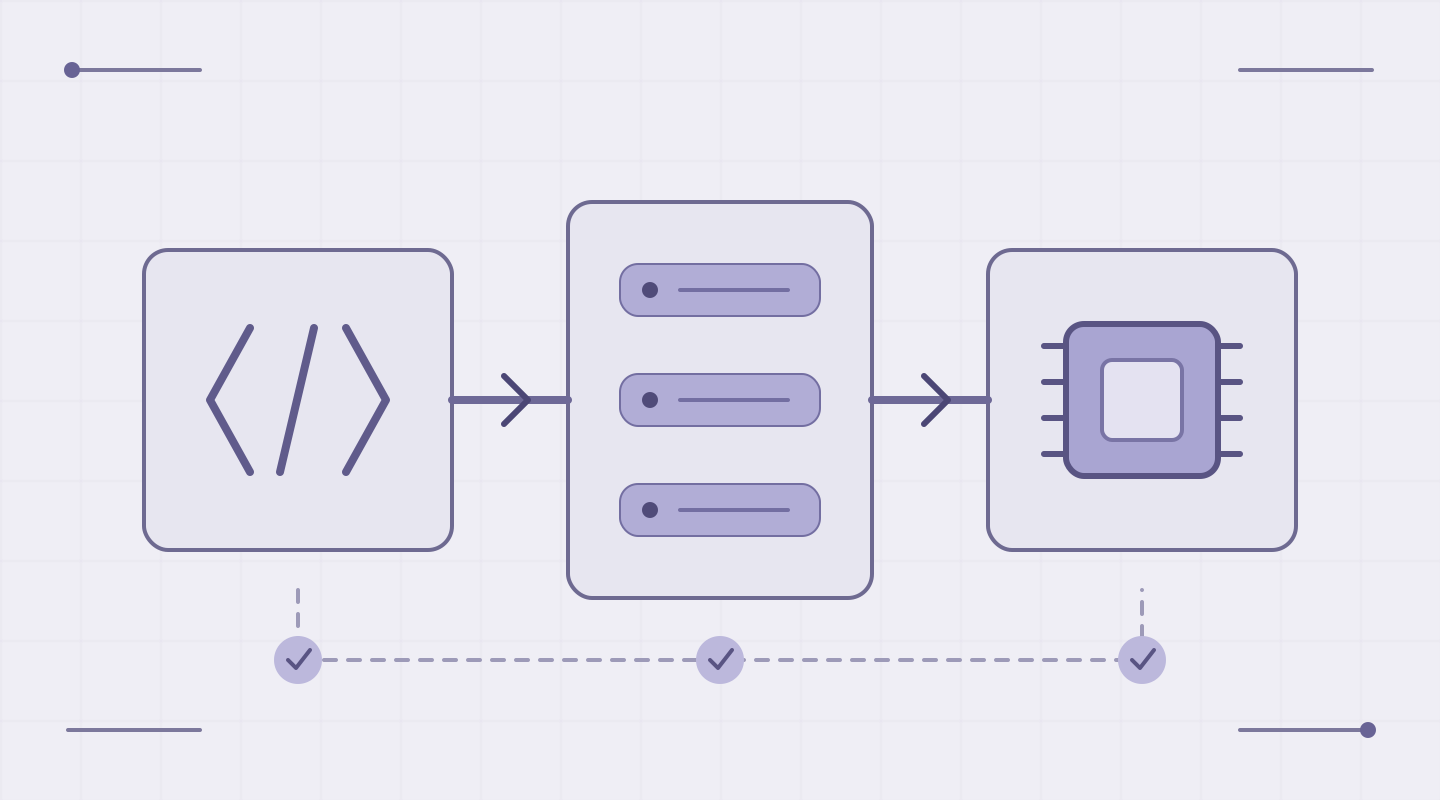
- Amazon says TorchNeuron lets existing PyTorch code run on Trainium with a configuration change rather than a rewrite.
- The company lists support for Trainium2 and Trainium3.
- An Apache 2.0 release is planned for October 20. At publication, that is a commitment, not a verified completed release.
The Signal
Amazon’s October 19 announcement puts software compatibility at the center of its AI-chip pitch. TorchNeuron is a native PyTorch backend for Trainium. Amazon says developers can retain their existing code and familiar workflows while changing the hardware underneath.
The company plans to release TorchNeuron under Apache 2.0 at PyTorch Conference North America on October 20. Its compatibility claims are vendor claims; this article does not independently validate them. The announcement is the news, while broad production readiness remains a question for testing.
The Shift
Cortist’s interpretation: the strategically interesting variable is the cost of changing your mind. A team choosing an accelerator is also choosing a stack of dependencies, debugging habits and operational procedures. A cheaper compute offer is less useful if reaching it consumes months of engineering capacity.
If a backend reduces that friction, competing hardware becomes easier to evaluate before a company makes a major commitment. Procurement could become more contestable: teams could compare alternatives with their own workloads instead of judging a platform primarily from vendor demonstrations. That is a plausible consequence, not an outcome established by this announcement.
Source compatibility is only one layer of portability. A training job can start successfully and still differ in numerical behavior, memory use, compilation overhead or scaling efficiency. Custom kernels and production integrations deserve particular attention. The meaningful question is whether the complete system works well, not simply whether a familiar script runs.
The Cortist Lens
For Cortist, this is a test of practical optionality. Open-source software can make a backend inspectable, but it does not by itself make an application independent of its infrastructure provider. Teams should distinguish the ability to read and modify code from the ability to move a deployed service at acceptable cost.
A useful evaluation would start with one representative workload and a known baseline. Keep the model, dataset, quality target and measurement window consistent. Record migration hours, failed runs, time to the required quality, serving latency where relevant, and the total infrastructure bill. Include human effort: a modest compute saving can disappear if maintaining a second deployment path becomes a permanent engineering project.
The stronger evidence would be a reproducible result from an independent team, including the changes it needed and the cases that failed. Until then, the right response is a bounded trial with explicit success criteria. An attractive demonstration should earn an experiment; a repeatable operational advantage should earn a migration.
Watch for the October 20 repository and license, a clear support matrix, documented limitations and independent workload comparisons. The decisive result would be less migration work without sacrificing quality, reliability or total cost.
The opportunity is a lower cost of switching. The proof will be a production workload that moves successfully—and remains worth running.
Source & editorial note
Cortist is an early-stage, AI-assisted editorial project. This analysis is based on the primary source below, published Oct 19, 2026. Where a company reports its own measurements or planned actions, we identify them as claims or intentions. Our interpretation is original; it is not a claim of independent experimental verification.
AmazonAmazon’s October 19 announcement; release planned for October 20