
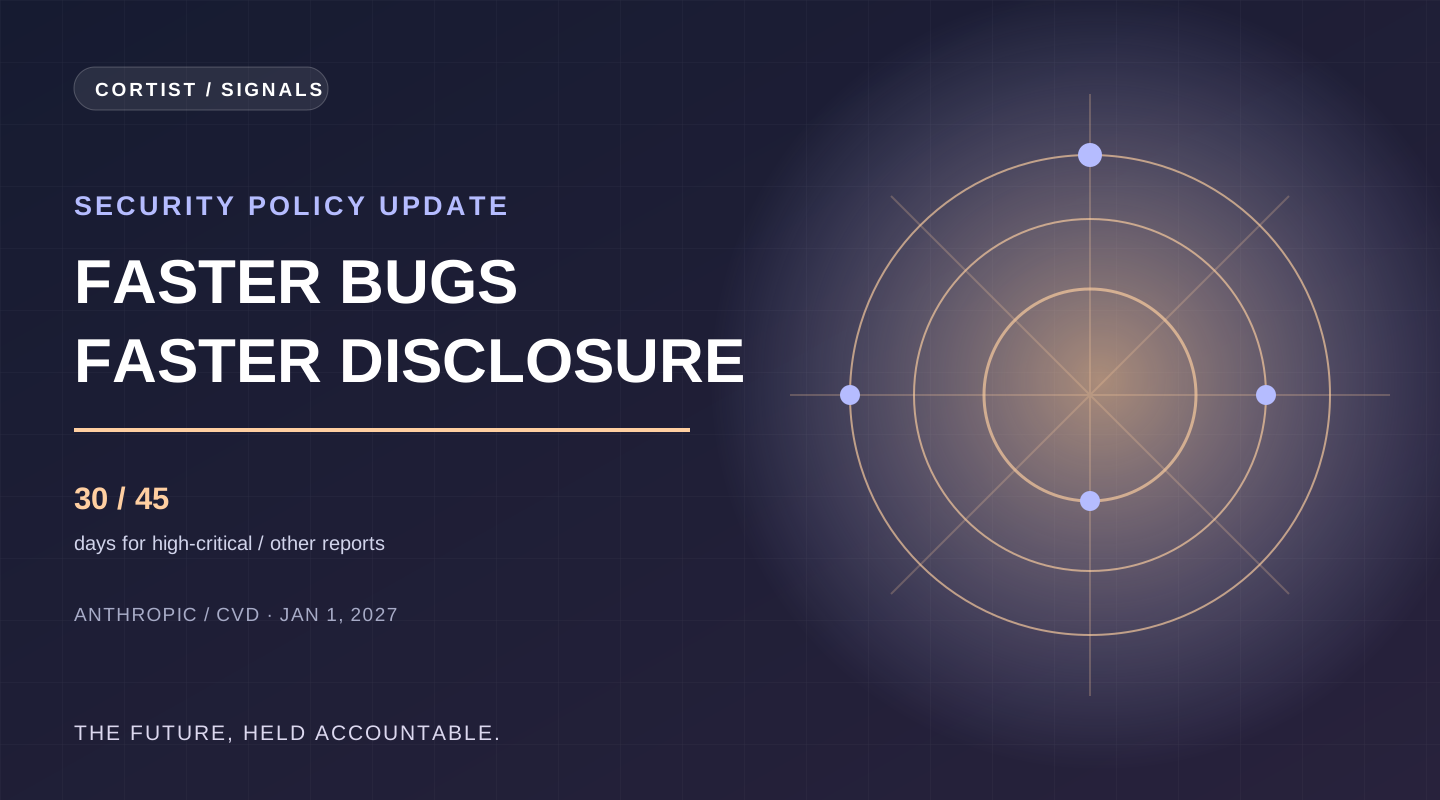
Does Anthropic’s new 30-day vulnerability disclosure deadline apply to every AI-found bug now?
No. Anthropic announced on November 16 that its 30-day deadline for high- and critical-severity vulnerabilities and 45-day deadline for other issues apply to reports made from January 1, 2027. In-progress reports retain their old deadlines, active exploitation has a separate seven-day rule, and unreviewed scanner findings are excluded.
- From January 1, 2027 Anthropic plans 30 days for high- and critical-severity disclosures and 45 days for other issues, replacing its general 90-day approach.
- Nonresponsive maintainers may be escalated to an external coordinator after 15 rather than 30 days. Full technical details may be shared 30 instead of 45 days after a patch is available.
- Special handling continues for active exploitation, difficult-to-remediate systems and findings without human review. Anthropic says it will coordinate pacing and provide actionable reports.
The signal
Anthropic announced a substantial change to how quickly it may disclose vulnerabilities discovered in security research. Its Frontier Red Team argues that frontier AI systems now find flaws and help developers build fixes faster, making the traditional 90-day disclosure clock increasingly hard to justify.
Under the new coordinated vulnerability disclosure policy, the reporting date matters: issues reported to maintainers on or after January 1, 2027 will generally have a 30-day window for high- and critical-severity findings and 45 days for all others. Reports already in progress at the changeover retain their prior deadlines.
This is a forward-looking policy commitment rather than evidence that maintainers can consistently patch critical defects within 30 days. It is also not a blanket promise to publish every AI-generated suspicion: human review remains a prerequisite for findings covered by this update.
The policy details
Anthropic is also changing two related clocks. For vendors or maintainers that do not respond to an initial report, the company aims to involve an external vulnerability coordinator after 15 days instead of 30. After a patch is available, it plans to wait 30 rather than 45 days before sharing full technical details.
Important exceptions remain. Anthropic’s existing seven-day window for an actively exploited vulnerability does not change. Software that is unusually difficult to patch, such as critical infrastructure or changes requiring formal standards work, can receive coordinated remediation timelines. The new policy excludes AI findings that have not passed human review, including unreviewed automated OSS Scanner output.
For high- and critical-severity issues already reported more than 90 days earlier and still undisclosed, Anthropic says it is notifying maintainers of an additional 30-day period before publishing the findings on its dashboard under the revised process beginning January 1. This is a specific catch-up measure, not retroactive application of the general 30-day clock to every preexisting case.
The Cortist perspective
A shorter disclosure deadline can incentivize remediation and reduce the useful secrecy window for bugs that AI systems may quickly rediscover. But faster publication can also impose substantial pressure on small open-source teams that need time to test fixes and distribute patches to users.
The right outcome metric is not the number of vulnerabilities disclosed on time. It is the number of human-validated vulnerabilities that receive effective mitigations, how quickly maintainers can respond, and whether premature disclosure correlates with harm. Anthropic’s announcement advances a testable operational promise, not a demonstrated improvement in security outcomes.
We will preserve the announced dates and carve-outs rather than simplify the policy into a misleading universal 30-day rule. That makes this a useful Cortist watch item without silently changing any historical scored forecast or Reality Ledger baseline.
04 / What we will watch
The policy’s January 1 implementation; maintainer outreach and response times; external-coordinator escalations; the first dashboard disclosures under the revised deadlines; and independent maintainer feedback about remediation and possible abuse. Compliance and security impact should be assessed separately.
Frequently asked questions
When do the shortened timelines start?
For vulnerability reports submitted to maintainers on or after January 1, 2027. Earlier in-progress reports keep their existing deadlines.
Are all vulnerabilities disclosed after 30 days?
No. The general rule is 30 days for high and critical severity and 45 days for other vulnerabilities; separate exceptions and coordination procedures apply.
What about actively exploited bugs and unreviewed AI scans?
The existing seven-day active-exploitation window is unchanged, and the new update excludes findings without human review.
Primary sources and verification limits
Cortist separates official disclosures, research critiques, unresolved allegations and independently verified outcomes. No original Ledger claim or scored forecast was modified as a result of this news analysis.