
Epoch AI, AI chip performance per dollar
Historical spending-weighted data, not an assurance of future 5× improvements.
Read original evidence ↗AI compute includes accelerators, memory, networking, software and the energy required to run models. Faster chips alone do not establish cheaper useful AI work; comparisons need consistent tasks and costs. Cortist's provisional F-005 estimates a 55% chance of a fivefold performance-per-dollar gain under defined criteria by 2030.
Subjective editorial scenario, not a measured or independently calibrated prediction.
Illustrative cumulative probability. Not automatically inferred from sources. Draft event criteria ↗
Useful capacity depends on accelerators, memory, interconnects, software and electricity. Chip counts alone do not measure completed AI work.
Explore the energy constraint →The metric links validated task output to cost, accounting for utilization, hardware, software and changing prices rather than raw speed alone.
Read the F-005 assumptions →Guide clarified 3 November 2026 · Source findings and forecast assumptions below retain their original recorded dates · Editorial standards
A later evidence-based probability update must be published as a new date-stamped version. The initial record remains unchanged.
The initial subjective scenario is now documented. No newer public version or independently scored result exists.
Resolution criteria require independent review before a prospective forecast lock.Hardware efficiency, price-performance, energy and the economics of AI scaling. An independently auditable, spending-weighted AI accelerator performance-per-dollar measure is at least five times higher in Q4 2030 than Q4 2025, in constant 2025 US dollars. Cortist provisionally assigns 55% by 2030. The value is a subjective public draft and should not be mistaken for an independently scored statistical prediction.
Evidence Pulse 2.0 checks the published Cortist News index when JavaScript is available. The source-linked, dated research articles remain accessible through Cortist News.
Latest topic-linked reporting, compared with the separately versioned Cortist assessment. News does not automatically update a forecast.
Evidence interpretation: Accelerator benchmarking and portability reports help explain future AI computing costs.
What remains unproven: Vendor and software reports do not prove a fivefold independent system-wide performance-per-dollar gain.
What to verify next: Spending-weighted accelerator performance per real dollar against a frozen baseline.
Snapshot of 3 linked reports. Context is not independent proof or a measured probability change. Dated evidence index · Original forecast v0.1.
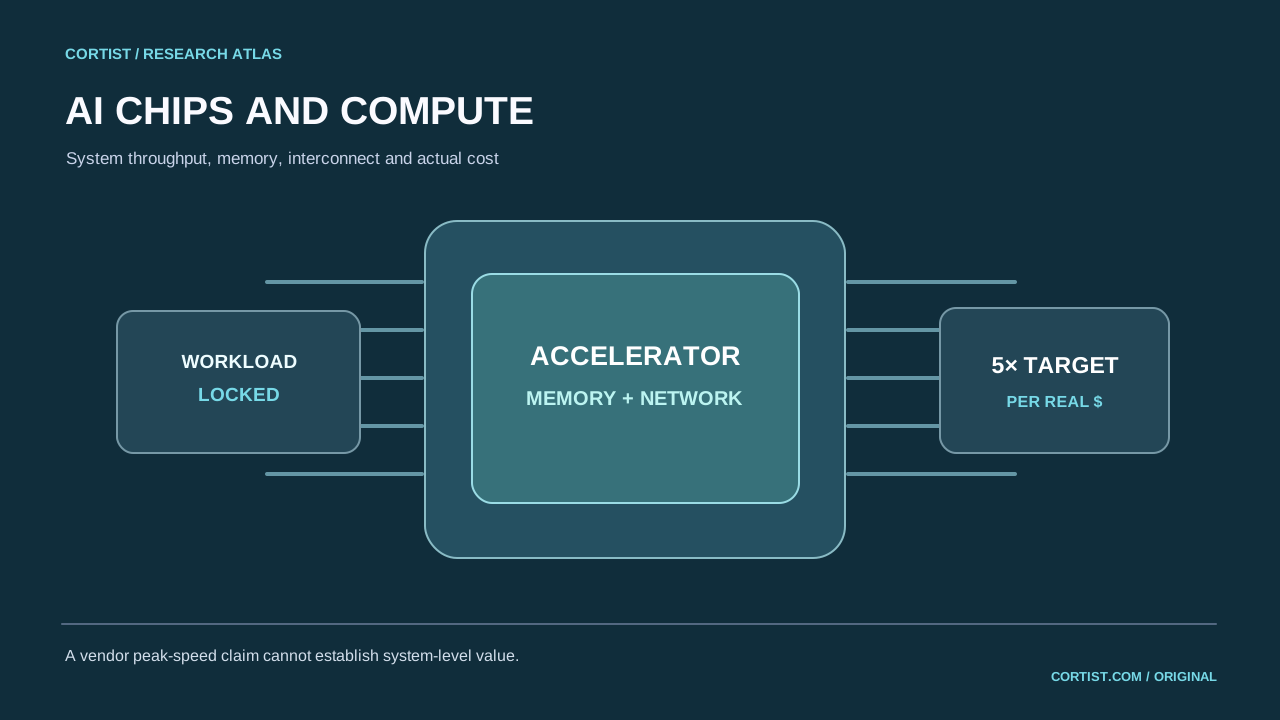
Epoch AI measured roughly 49% average annual improvement in chip performance per dollar since 2023. That spending-weighted trend moved in steps as new generations entered purchasing mixes rather than rising smoothly. It also differs from the cheapest available single chip. Fivefold growth between the selected quarters is a testable extrapolation, not a fact already observed.
TSMC has described A14 as targeting volume production in 2028 and highlighted improvements in performance, density and energy efficiency relative to N2. This is a manufacturer roadmap, not a measured benchmark outcome. Timing, yield, packaging, product availability and accelerator software can all change real value delivered to buyers.
AI computing performance depends on compute silicon, high-bandwidth memory, interconnects, networking, cooling, power delivery and software. NVIDIA's Vera Rubin platform illustrates the move towards integrated racks rather than stand-alone GPU comparisons. A smaller manufacturing node does not guarantee an equal gain in end-to-end training or inference efficiency.
A valid measurement must freeze arithmetic precision, workload relevance, inflation-adjusted prices, shipment weighting and the hardware class included. If the underlying Epoch AI series is retired, Cortist would require a prospectively specified equivalent before this draft is eligible to be scored. Vendor peak-throughput numbers are not interchangeable with an independent system-wide benchmark.
Evidence supporting a higher estimate could include independently documented jumps in shipment-weighted accelerator capability, falling relative purchase costs and better memory or packaging efficiency. Supply bottlenecks, expensive advanced packaging, constrained chip yields, export restrictions and power delivery limits could reduce or delay improvement. Separate price-performance from absolute computing spending.
Systems performance goes beyond a transistor node.
Faster and less expensive compute can make more model training and inference economically feasible. However, greater efficiency can also expand demand and total electricity consumption rather than automatically reduce it. Our Energy, AGI and AI Agents topics examine different consequences; none is resolved simply by the next semiconductor generation.
This is the first subjective editorial F-005 estimate for the selected 2030 event, not a calibrated probability. Move the timeline to see the disclosed scenario assumptions, not a live benchmark. The 2026 v0.1 snapshot is a historical version; any new estimate requires a new date, primary-source reasoning and a separate file.
Before an official forecast lock, independent reviewers must decide whether to freeze the original Epoch series or define an equivalent replacement, how to handle changes in precision conventions and what external benchmark constitutes reproducibility. Until then the percentage is clearly labeled a draft rather than a scored forecast.
Cortist monitors original datasets, official measurements and independent evaluations rather than treating manufacturer, researcher or policymaker claims as settled outcomes. Any material reassessment must disclose the previous value, the new evidence, counterarguments and the reason for changing the subjective assessment. The older snapshot will remain at its original versioned URL.
Before this question becomes eligible for formal scorekeeping, independent reviewers must agree on the boundary of the event, adjudication rules, data sources and any necessary fallback measurement. If an essential definition changes, a fresh forecast question will be published instead of rewriting an old one.
Historical spending-weighted data, not an assurance of future 5× improvements.
Read original evidence ↗2028 planned production timeline; manufacturer roadmap, not outcome.
Read original evidence ↗Manufacturer platform claims require measured price-performance validation.
Read original evidence ↗Source summaries distinguish historical measurements, institutional research and forward-looking claims. None independently validates the 55% draft probability.
General intelligence is not established by progress on any single specialized metric.
Explore AGI ↗CONNECTED RESEARCHCompute and AI deployment depend on physical infrastructure and electricity.
Explore energy ↗CONNECTED RESEARCHLabor-market outcomes must be measured independently from technical capability.
Explore jobs ↗Three existing Cortist articles with related research, economics or governance context. Original articles and their primary classifications remain unchanged.
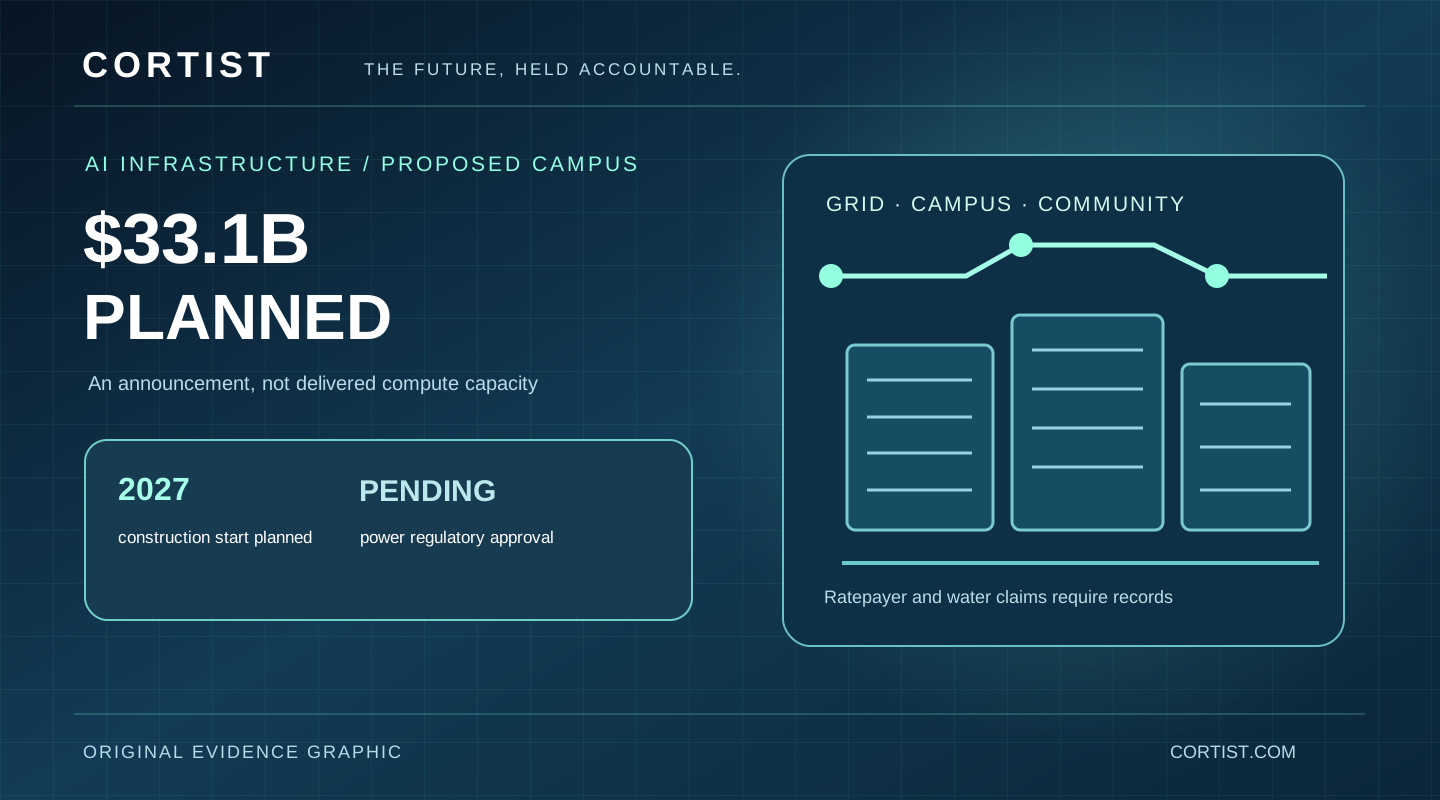
Lambda plans a $33.1B Alabama AI campus, with power approval pending and tax, jobs and water claims still forecasts. We separate announced commitments from delivered outcomes.
Read the evidence review ↗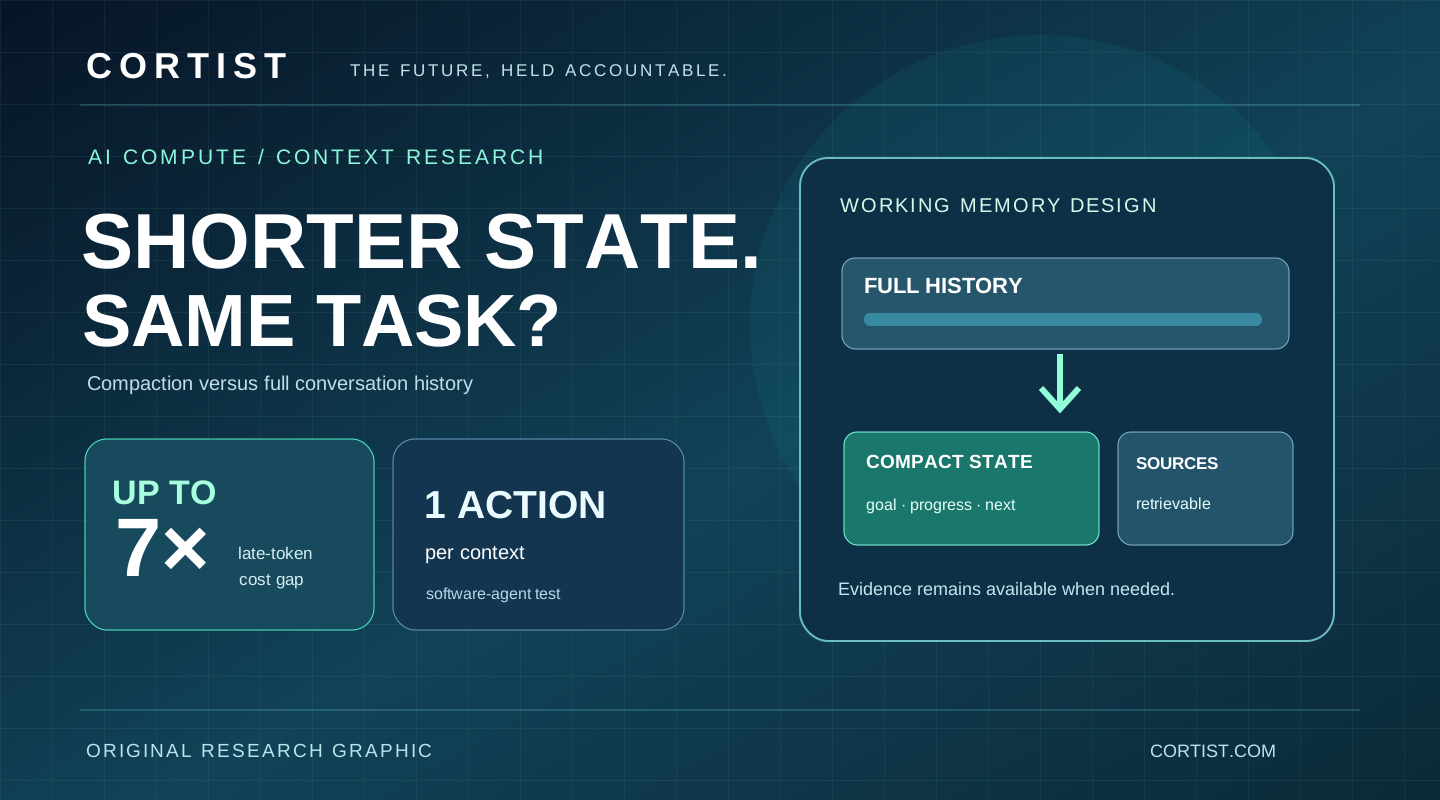
NVIDIA researchers report up to a sevenfold late-token serving-cost gap and little loss from frequent context compaction on selected tasks. The claim needs replication.
Read the evidence review ↗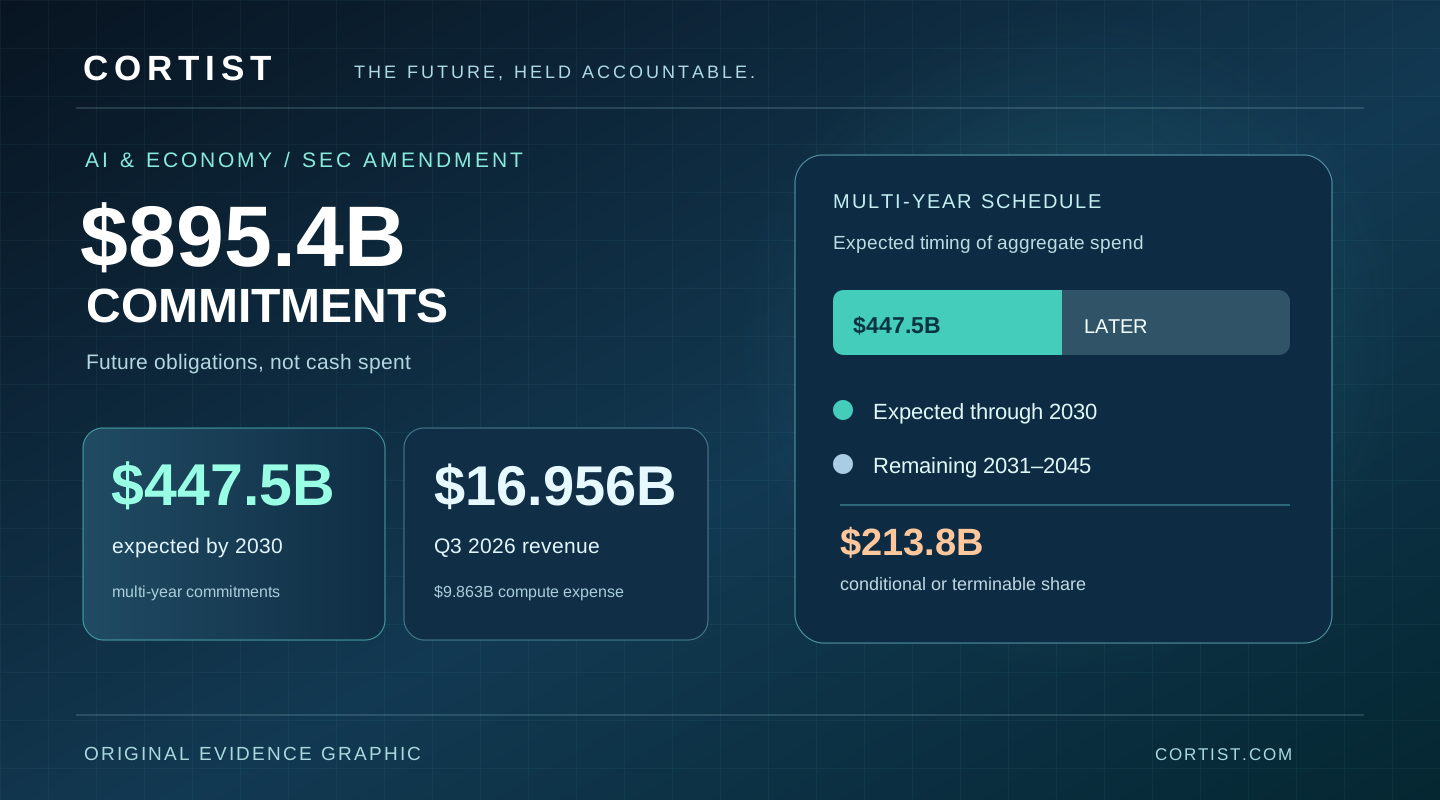
Anthropic’s November 2 S-1 amendment adds Q3 figures and $895.4B in compute-heavy commitments. Cortist separates obligations, costs and profit.
Read the source-attributed analysis ↗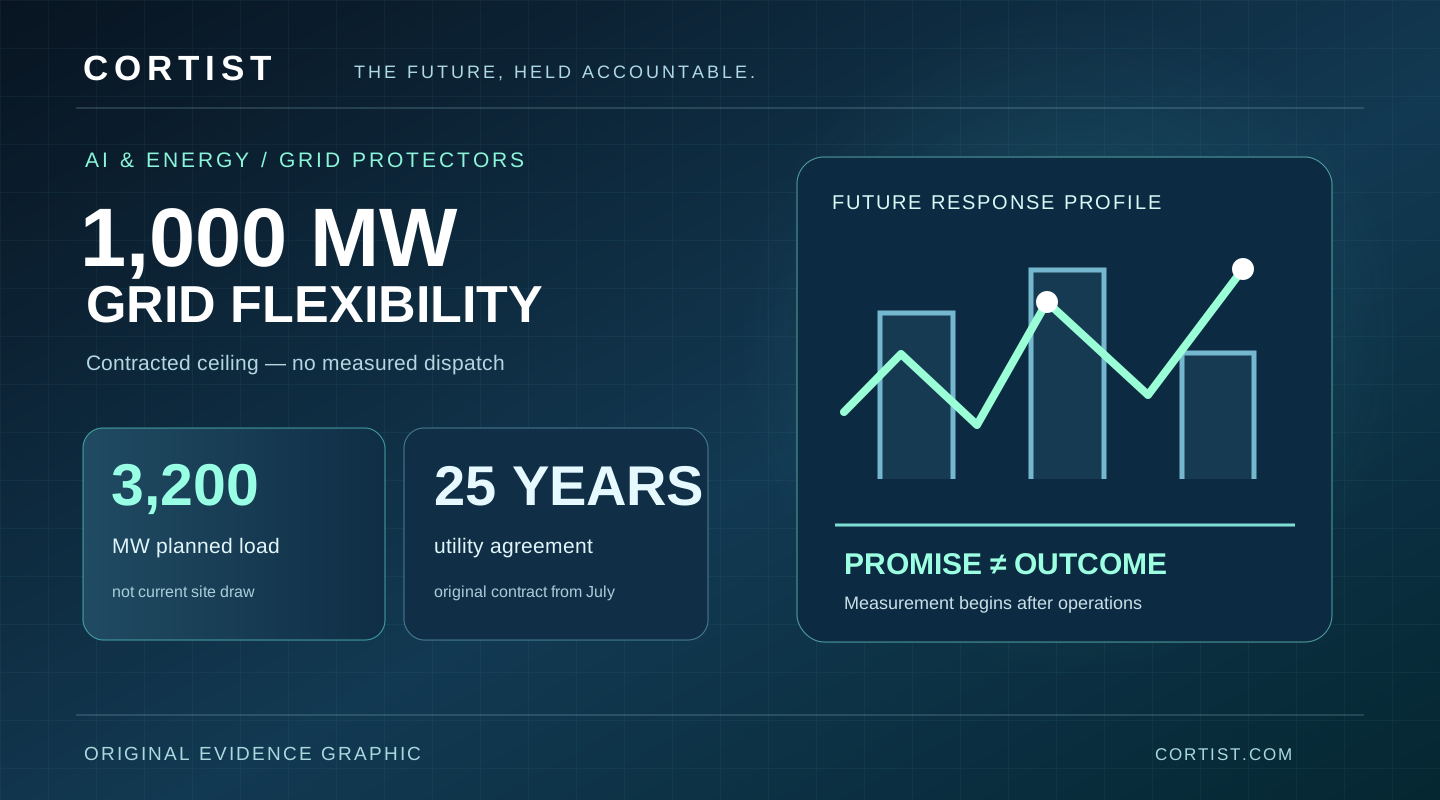
OpenAI’s Grid Protectors program cites a 1,000 MW Georgia demand-response agreement. The capacity is contracted, not a measured delivery result.
Read the source-attributed analysis ↗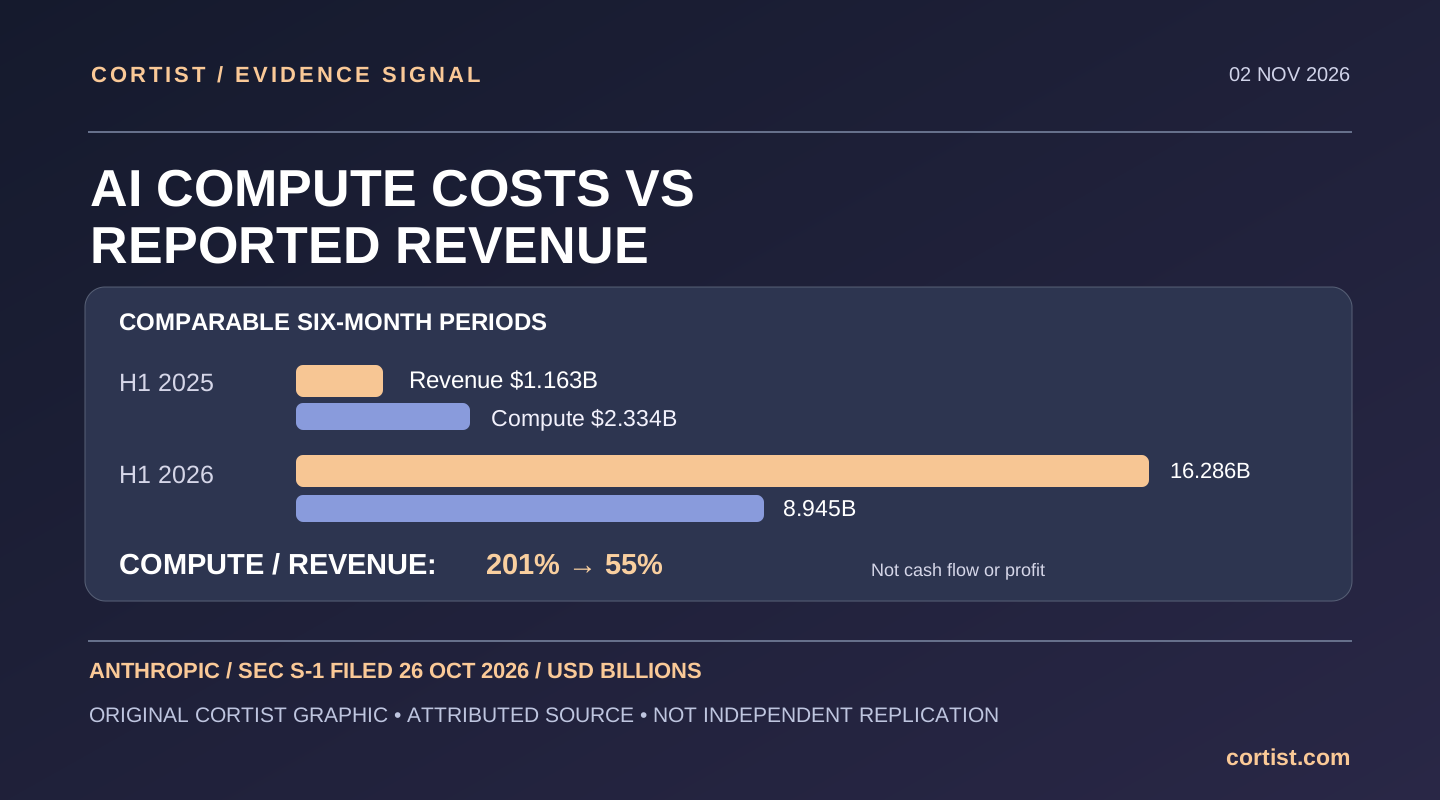
Anthropic's SEC S-1 reports $16.286B revenue and $8.945B compute expense over six months. Cortist separates growth from accounting losses.
Read the source-attributed analysis ↗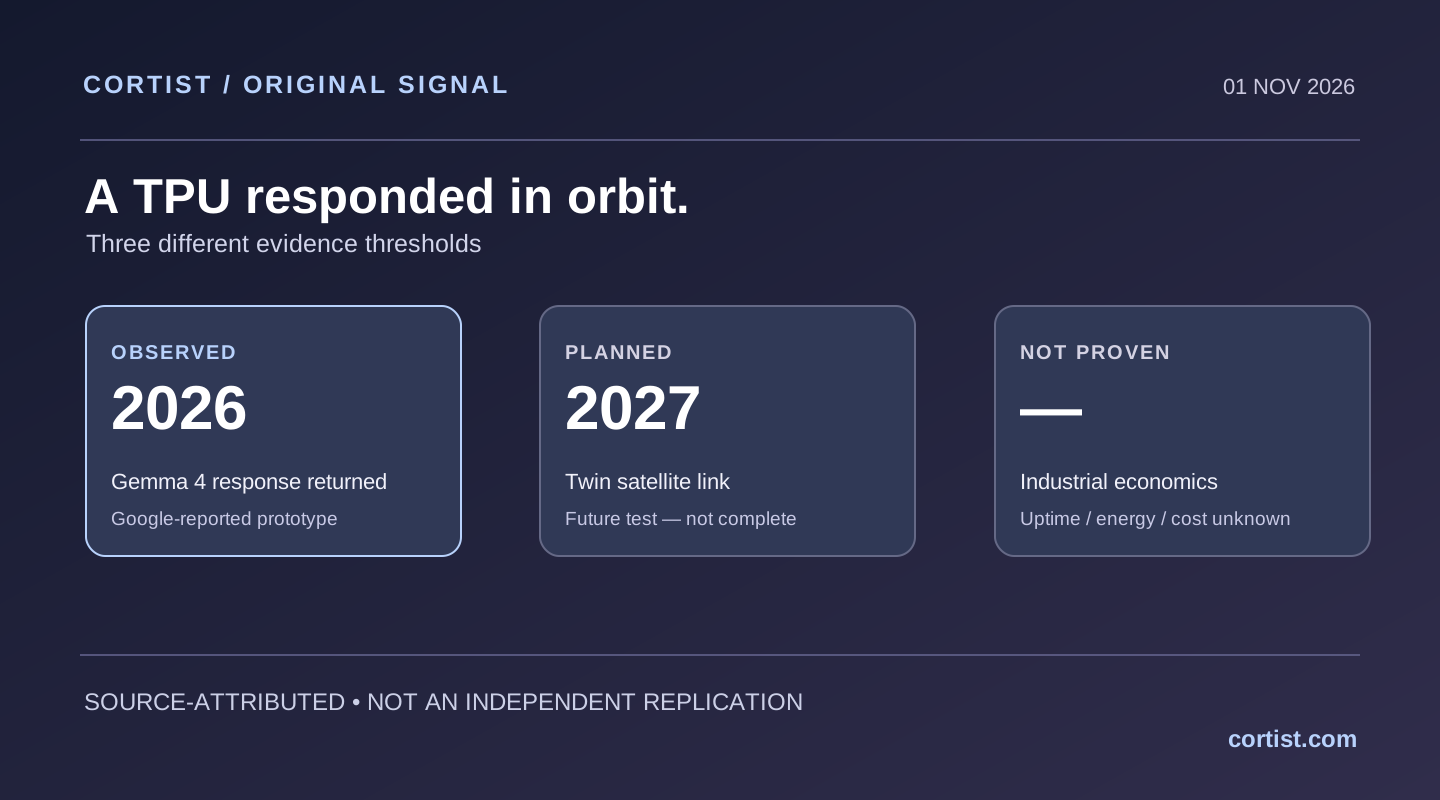
Google reports its first AI response from a data-center-class TPU in orbit. Cortist separates the Project Suncatcher prototype milestone from viable space-based AI infrastructure.
Read the source-attributed analysis ↗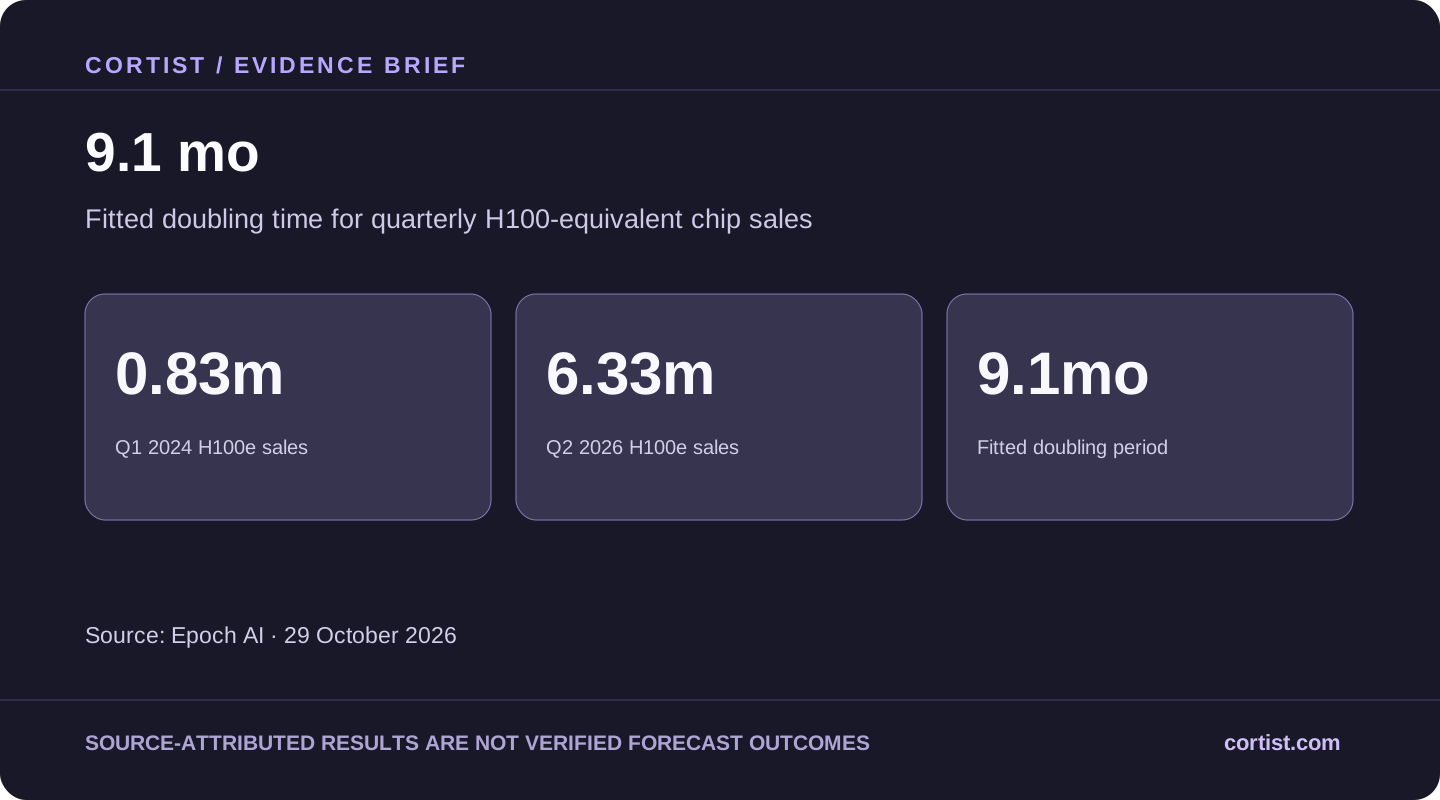
Epoch AI estimates 2.5× yearly growth in compute capacity sold between early 2024 and mid-2026. These are chip-sales estimates, not proof of deployed capacity or AI progress.
Read the source-attributed analysis ↗Related editorial context; this story does not independently verify the F-005 milestone.
Read source-checked report ↗Related editorial context; this story does not independently verify the F-005 milestone.
Read source-checked report ↗Related editorial context; this story does not independently verify the F-005 milestone.
Read source-checked report ↗No. Workload speed depends on memory, interconnects, packaging, software and costs as well as transistor fabrication.
No. It is an initial subjective editorial probability for a specific future milestone, with evaluation criteria still under review.
No. The proposed metric is an aggregate spending-weighted performance-per-dollar measure in constant dollars.
It represents the subjective probability that the specified milestone has occurred by the selected year-end, not yearly chip sales.
A frozen comparable benchmark, auditable historical baseline, independent review and prospective publication of the resolution standard.
See the publicly documented Cortist forecast history and separate the latest estimate from every earlier one.